Mining robots are moving from remote control toward more autonomous work, yet public claims often arrive without the numbers needed to judge them. For a mining operator, the useful question is plain: can a robot complete a real task safely, for long enough, at a cost the site can carry?
- Task first: Check the exact job the robot performs, such as drilling, haulage, mapping, or inspection.
- Proof next: Ask for runtime, payload, operating conditions, and human input during the test.
- Cost matters: Include training, site changes, maintenance, network coverage, and downtime.
The work mining robots must handle
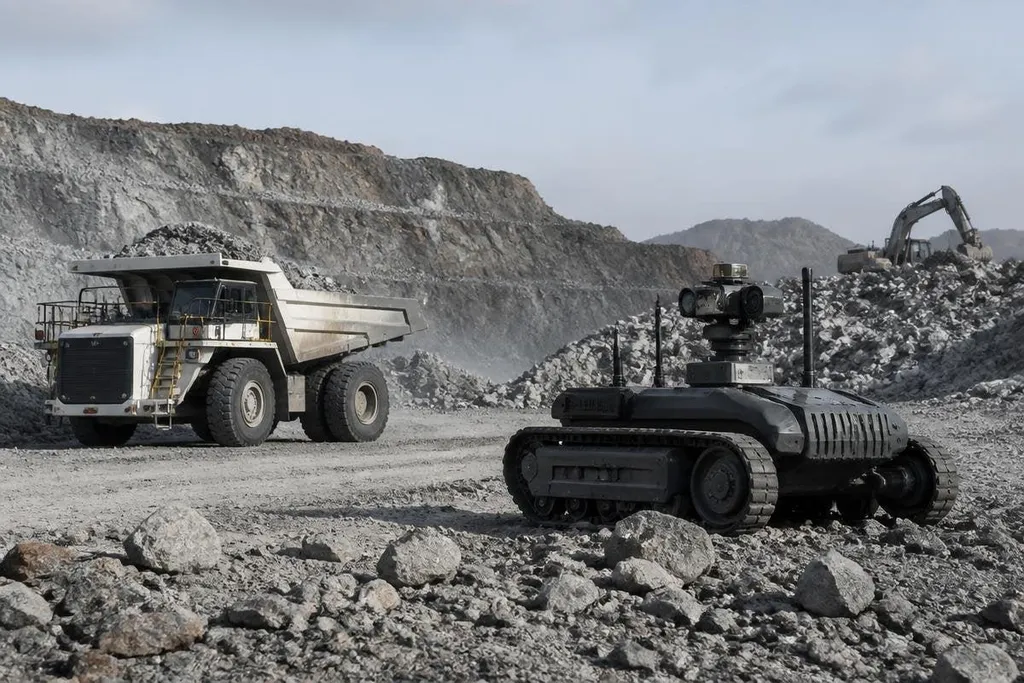
Mining sites place machines in areas where people face dust, heat, loose rock, poor visibility, water, and limited communications. The system may reduce exposure to one hazard while adding a new need for sensors, charging points, network links, or remote operators.
The job also sets the design. A mapping robot needs cameras, LiDAR, and software that can build a usable view of the tunnel or pit. A drilling system needs accurate positioning and control of the drill.
An autonomous haul truck needs a way to detect people, vehicles, walls, and changing ground conditions before it moves. Those systems should be judged by the work they finish. A machine that maps one section in a controlled test has proved less than one that repeats the task across a working site, under the same conditions that mining crews face each day.
Autonomy is a test result, not a label
Mining companies need a clear record of human input. The machine may drive on its own during normal operation while a remote worker handles route changes, blocked paths, sensor faults, or recovery after a stop. Those details change the staffing model and the cost.
The useful report should state how many hours the system ran, how often it stopped, what caused each stop, and how a person restarted it. It should also say which parts of the work happened without help. A short video can show motion; it can't show the full operating record.
Mining automation claims need a record of the mine, machine, task, and person who took control after a stop. Robot24.com robotics coverage can tie those details to dated trials before you judge whether the system kept working after its first successful run.
I’d rank repeatable site results above a polished demonstration every time.
The cost sits outside the robot
A purchase price, when a maker publishes one, tells only part of the story. Mining operators may also need new charging equipment, protected work areas, network coverage, control rooms, spare parts, software support, and staff training.
A robot that works in an open pit may need a different setup from one working underground. Ground conditions, lighting, radio coverage, ventilation, and access routes can change the result. A claim about one site should not become a claim about every mine.
The missing figure is often productivity. Operators need the number of completed metres, loads, inspections, or mapped areas per shift. Without that measure, “autonomous” says little about output.
What the industry still needs to show
A fair global comparison needs shared reporting. Each project should publish the task, site type, operating hours, human support, failure rate, maintenance needs, and result against the current method.
That record would also expose the limits. One robot may work well in a mapped tunnel yet struggle after a collapse changes the route. A haul truck may follow planned paths yet stop when dust blocks a sensor. These are engineering problems to measure, not reasons to dismiss the whole field.
A practical buying check
Before a mining operator treats a robot claim as a purchase case, ask for:
- Task record: What exact job did the system complete, and what counted as success?
- Site match: Did the test use the same mine type, ground conditions, and network limits?
- Human workload: How many people watched, guided, repaired, or restarted the robot?
- Failure log: How often did it stop, and how long did recovery take?
- Output measure: What did it finish per hour or shift compared with the current method?
- Full cost: Which site changes, support contracts, spare parts, and training costs are included?
The companies that answer those questions with dated records will give mining operators something they can price and plan around. Until then, the global race is mainly a race to produce better evidence.